My PhD journey comes to an end: the role of ecological interactions

Ecology is often described as the web of life. Many complex interactions occur across this web, including between individuals of the same or different species (biotic) or between the environment and a species (abiotic). Understanding ecological interactions, such as the role of predators in an ecosystem or how climate influences the abundance of a species, are fundamental for describing how this web of life works.

After working for over 10 years in central Australia I had become hooked on the Simpson Desert. The sand dunes of the Simpson Desert that lie in south-western Queensland and towards the border of the Northern Territory are like a second home to me. The red parallel dunes roll across the landscape like waves across the ocean, carrying spinifex, a spiky grass that form odd-looking donuts floating the red surface. There is something about the red sand that gets under your skin and keeps drawing you back. This setting was where I would tackle the question—what are the relative roles of both biotic and abiotic interactions for driving an ecosystem? The Simpson Desert, like many areas of Australia, has another characteristic I could take advantage of: every trip to the Simpson is different. A small storm may have gently swept rain across the sand and marked out a patch of green for all to see against a canvas of red. Further down the road, the vegetation may lay twisted and grey, prostrate as if it collapsed from the effort of begging for rain. This high variability across time and the landscape must be important for explaining how species live in such a hostile environment. Furthermore, the earth’s climate is changing. How will climate change affect the ecology of central Australia, a region of Australia where the extinctions of native animals has already hit the hardest? What lessons can this remote and understudied part of the globe teach us about our world? It was from these questions pressing on my mind that my PhD was born.
panopan

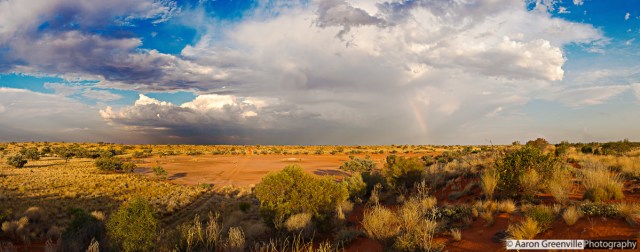
Small storms can fall through-out the year in the Simpson Desert turning patches green, but other areas remain dry. This variability added an extra dimension to my PhD project. Photo by Aaron Greenville.

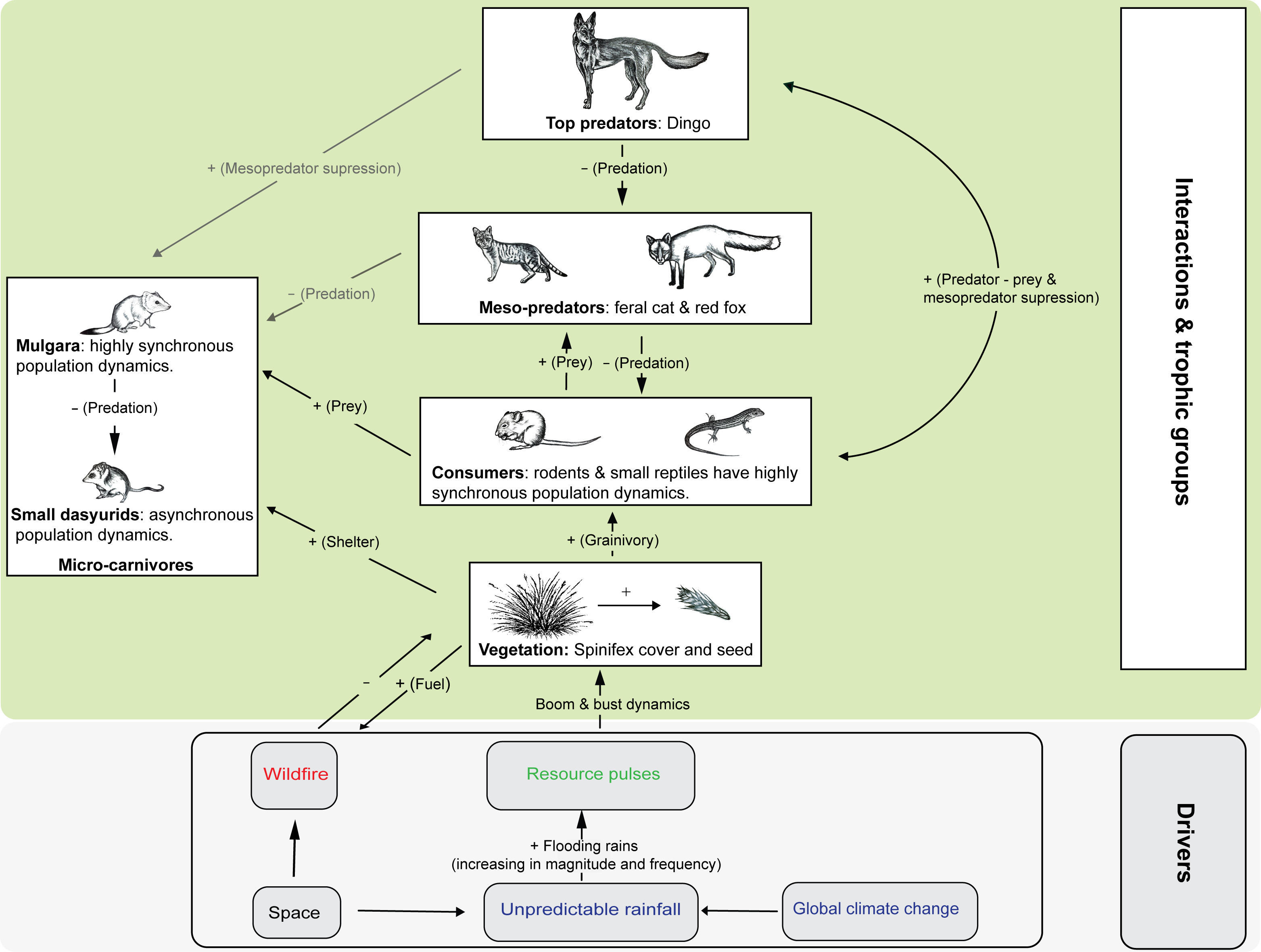
I found that the operation of both biotic (species‑species) and abiotic (species‑environment) interactions were important for the ecology of the Simpson Desert (see figure below). More interestingly, interactions are not fixed and can change across the landscape and through time. For example, the relative influence of predation compared to increases in food from large rainfall events varied over the years. How this affected the role of the dingo in supressing smaller predators, such as the red fox and feral cat, and the implications for feral predator management were highlighted in an earlier article.

Chapter 8-fig1

Figure 8.1 from my thesis: Summary of thesis findings on biotic and abiotic interactions in an arid environment. Here we see how interactions are context-specific and can change over the landscape and time. Grey arrows are possible future interactions to explore. Diagrams by A. Foster.

Fierce debates raged in 1950s and 1960s the about the importance of biotic verses abiotic factors for populations after some Australian ecologists argued that the established dogma of the northern hemisphere ecologists may not be the whole story. The upstarts, H.G. Andrewartha and L.C. Birch, published a seminal text: The distribution and abundance of animals, which used empirical evidence, rather than the largely theoretical evidence from the northern hemisphere, to demonstrate that the environment (abiotic factors) could influence the population abundance of a species. Today, findings such as mine are showing that both biotic and abiotic factors are important. This kind of understanding is crucial if we are going to try and predict how species will be affected by climate change.

Over the past 100 years the climate of central Australia has changed. The deserts have warmed and the frequency of extreme rainfall events have increased. This may effect populations of native species. For example, extreme rainfall events (>95th quantile, or >400 mm, for the Simpson Desert) were required for rodent populations to increase, resulting in a boom in population numbers. One example was long-haired rat which I wrote about here . However, not all small mammals responded to the same drivers, as dasyurid marsupials (such as dunnarts) were not influenced by extreme rainfall events. These interactions are becoming increasing important to understand, as extreme weather events, such as tropical cyclones, heat waves and flooding rains, are increasing in magnitude and frequency. Increases in extreme weather events may change species’ populations through increases in mortality rates, decreases in reproduction, and by facilitation of invasive species or novel interactions. In addition, extreme weather events, such as flooding rains, are important not only for driving food pulses in arid systems, but also other abiotic events such as wildfire.

Not only do different species show a different response to rainfall over time, they also show different responses across the landscape. Native rodents, like the spinifex hopping mouse, exhibit a high level of population synchrony across the study region. Even though each population was separated by at least 20 km, thus preventing dispersal between populations from being a big factor (the rodents I was studying are only 10‑35 grams and the reptiles are even smaller), large rainfall events that occurred through-out the region could drive all the rodent populations up in the same way. The highs and lows of each population were in synchrony, dancing in uniform across an 8000 km2 study area. The dunnarts did what dunnarts do best: whatever they want. Each population I looked at was dancing to its own beat. Contrasting strategies in responses to rainfall in a water-limited environment. Such information is vital for knowing how best to conserve each species. A “one size fits all” approach to conservation management will not work for the small mammals and reptiles I studied.

Species do not only respond to biotic and abiotic factors differently over the landscape or across time. We also need to look at multiple factors, such as rainfall and wildfire, simultaneously when trying to predict how species will interact with each other and their environment. Projecting my findings that the frequency of extreme rainfall events had increased into the future (the next 100 years), populations of rodents did not increase as much as expected, as increases in wildfire frequency and current levels of introduced predators limited rodent populations. After removing introduced predators and keeping dingoes in the system, rodents could take advantage of increases in extreme rainfall events.

IMG_20150224_145658_1

The final product after 3.5 years of work: a thesis and several scientific and popular science articles.

I am truly indebted to all the help and support I have had in this journey. Particularly to my supervisors Professors Glenda Wardle and Chris Dickman, my wife, friends and family. Funding was provided by the Australian Research Council, an Australian Postgraduate Award and the Australian Government’s Terrestrial Ecosystems Research Network. Perhaps it is best to end this post with the last paragraph of my thesis:

“This thesis has attempted to take advantage of over 20 years of ecological research focused on the ecology of central Australia. Of this history, I have been fortunate enough to have been part of the last 15 years of the endeavour, working in various capacities. Even though the hand of extinction has been brought down most strongly in Australia’s arid regions, studies such as this elucidate the complexity of the current ecology of central Australia and the sense of wonder that this environment conveys. This wonder feeds curiosity and surely curiosity, the most noble of human traits, needs to be conserved.”


Further reading:

Andrewartha, H. G. and L. C. Birch. 1954. The distribution and abundance of animals. University of Chicago Press, Chicago, USA.

Dickman , C., G. M. Wardle, J. Foulkes, and N. de Preu. 2014. Desert complex environments, Pages 379-438 in D. Lindenmayer, E. Burns, N. Y. Thurgate, and A. Lowe, editors. Biodiversity and environmental change: monitoring, challenges and direction. CSIRO Publishing, Vic.

Greenville, A. C. 2015. The role of ecological interactions: how intrinsic and extrinsic factors shape the spatio-temporal dynamics of populations. PhD Thesis. University of Sydney, Sydney.

Greenville AC, Wardle GM, Tamayo B, Dickman CR (2014). Bottom-up and top-down processes interact to modify intraguild interactions in resource-pulse environments. Oecologia, 1-10.

Greenville, A.C., Wardle, G.M. and Dickman, C.R. (2013). Extreme rainfall events predict irruptions of rat plagues in central Australia. Austral Ecology, 38: 754–764.

Greenville A. C., Wardle G. M., Dickman Christopher R. (2012). Extreme climatic events drive mammal irruptions: regression analysis of 100-year trends in desert rainfall and temperature. Ecology and Evolution, 2, 2645-2658.

Greenville A. C., Dickman C. R., Wardle G. M. & Letnic M. (2009). The fire history of an arid grassland: the influence of antecedent rainfall and ENSO. International Journal of Wildland Fire, 18, 631-639.

Top Dog: How Dingoes Save Native Animals. Australasian Science, November 2014.
 

Posted in Conservation, Ecology, Publications | Tagged , , , , , , , , | 1 Comment

New paper: Ecosystem risk assessment of Georgina gidgee woodlands

Authors: Glenda Wardle, Aaron Greenville, Anke Frank, Max Tischler, Nathan Emery and Christopher R Dickman.

Published in: Austral Ecology Special Issue: Ecosystem Risk Assessment

Abstract:

Ecosystems across the world, and the biodiversity they support, are experiencing increasing anthropogenic pressure, and many will not persist without intervention. Given their complexity, the International Union for Conservation of Nature has adopted an international standard for ecosystem risk assessment that builds on the strengths of the species-based Red List criteria.

A Gidgee stands against a smoky sunset. Photo by Aaron Greenville

A Gidgee (Acacia georginae) stands against a smoky sunset, Simpson Desert, Qld. Photo by Aaron Greenville


We applied this protocol to the relatively understudied Georgina gidgee woodland ecosystem, which has a patchy but widespread distribution in central Australia. To address the extensive knowledge gaps, we gathered data to provide the first description of the characteristic biota, distribution of dominant species and the processes that support the ecosystem. Criteria evaluated include historical, current and future declines in spatial distribution, the extent and area of occupancy, and disruptions to abiotic and biotic processes. Future declines in suitable habitat were based on key climatic variables of rainfall, temperature and soil substrate. We also quantified the uncertainty in bioclimatic models and scenarios as part of predicting degradation of the abiotic environment.

Overall, we assessed the risk status of Georgina gidgee woodlands as vulnerable based on the degradation of abiotic and biotic processes. Bioclimatically suitable habitat was predicted to decline by at least 30% in eight scenarios over the period 2000 to 2050. Predicted declines in overall suitable habitat varied substantially across all scenarios (7–95%). Pressures from grazing, weed encroachment and altered fire regimes further threaten the ecosystem; therefore, vulnerable status was also recorded for future declines based on altered biotic processes. Accurate mapping and monitoring of the study ecosystem should receive priority to inform conservation decisions, and sustainable grazing practices encouraged. Our findings focus attention on other patchily distributed ecosystems that may also have escaped attention despite their contribution to supporting
unique biodiversity and ecosystem services. It is timely that environmental monitoring  and policy account for these natural assets.

Georgina gidgee woodlands snake through the swales in the Simpson Desert. Photo by Aaron Greenville.

Georgina gidgee woodlands snake through the dune swales in the Simpson Desert. Photo by Aaron Greenville.


Reference:

Wardle, G. M., Greenville A. C., Frank A. S. K. , Tischer M., Emery N. J. & Dickman C. R. (2015). Ecosystem risk assessment of Georgina gidgee woodlands in central Australia. Austral Ecology 40: 444-459.

Related reading:

Dickman C. R., Greenville A. C., Tamayo B. & Wardle G. M. (2011). Spatial dynamics of small mammals in central Australian desert habitats: the role of drought refugia. Journal of Mammalogy 92, 1193-209.

Frank A. S. K., Wardle G. M. , Dickman C. R. & Greenville AC (2014). Habitat- and rainfall-dependent biodiversity responses to cattle removal in an arid woodland-grassland environment. Ecological Applications, 24:2013–2028.


Posted in Conservation, Ecology, Publications | Tagged , , , , , , , , , | Leave a comment

New paper: On the validity of visual cover estimates for time series analyses

Authors: Vuong Nguyen, Aaron Greenville, Chris Dickman and Glenda Wardle.

Journal: Plant Ecology

Spinifex (Triodia basedowii) in the Simpson Desert, Qld. Photo by Aaron Greenville.

Spinifex (Triodia basedowii) in the Simpson Desert, Qld. Photo by Aaron Greenville.

Abstract:

Changes in vegetation cover are strongly linked to important ecological and environmental drivers such as fire, herbivory, temperature, water availability and altered land use. Reliable means of estimating vegetation cover are therefore essential for detecting and effectively managing ecosystem changes, and visual estimation methods are often used to achieve this. However, the repeatability and reliability of such monitoring is uncertain due to biases and errors in the measurements collected by observers. Here, we use two primary long-term monitoring datasets on spinifex grasslands, each established with different motivations and methods of data collection, to assess the validity of visual estimates in detecting meaningful trends.

The first dataset is characterised by high spatial and temporal coverage but has limited detail and resolution, while the second is characterised by more intensive sampling but at fewer sites and over a shorter time. Using multivariate auto-regressive state-space models, we assess consistency between these datasets to analyse long-term temporal and spatial trends in spinifex cover whilst accounting for observation error. The relative sizes of these observation errors generally outweighed process, or non-observational errors, which included environmental stochasticity. Despite this, trends in the spatial dynamics of spinifex cover were consistent between the two datasets, with population dynamics being driven primarily by time since last fire rather than spatial location. Models based on our datasets also showed clear and consistent population traces.

We conclude that visual cover estimates, in spite of their potential uncertainty, can be reliable provided that observation errors are accounted for.

Reference:

Nguyen, V., Greenville A., Dickman C., and Wardle G. 2015. On the validity of visual cover estimates for time series analyses: a case study of hummock grasslands. Plant Ecology, 1-14.


Posted in Ecology, Publications | Tagged , , , , , , , , , , | 1 Comment

New paper: Resolving the value of the dingo in ecological restoration

Authors: Thomas M Newsome, Guy-Anthony Ballard, Mathew S Crowther, Justin A Dellinger, Peter J S Fleming, Alistair S Glen, Aaron C Greenville, Chris N Johnson, Mike Letnic, Katherine E Moseby, Dale G Nimmo, Michael Paul Nelson, John L Read, William J Ripple, Euan G Ritchie, Carolyn R Shores, Arian D Wallach, Aaron J Wirsing and Christopher R Dickman.

Published in: Restoration Ecology.

Abstract:

There is global interest in restoring populations of apex predators, both to conserve them and to harness their ecological services.

In Australia, reintroduction of dingoes (Canis dingo) has been proposed to help restore degraded rangelands. This proposal is based on theories and the results of studies suggesting that dingoes can suppress populations of prey (especially medium- and large-sized herbivores) and invasive predators such as red foxes (Vulpes vulpes) and feral cats (Felis catus) that prey on threatened native species.

The dingo is one of Australia's top-predators. Photo by Bobby Tamayo.

The dingo is one of Australia’s top-predators. Photo by Bobby Tamayo.


However,the idea of dingo reintroduction has met opposition, especially from scientists who query the dingo’s positive effects for some species or in some environments. Here,we ask ‘what is a feasible experimental design for assessing the role of dingoes in ecological restoration? ’

We outline and propose a dingo reintroduction experiment — one that draws upon the existing dingo-proof fence — and identify an area suitable for this (Sturt National Park, western New South Wales). Although challenging, this initiative would test whether dingoes can help restore Australia’s rangeland biodiversity, and potentially provide proof-of-concept for apex predator reintroductions globally.

Newsome TM, Ballard G, Crowther MS, Glen AS, Dellinger JA, Fleming PJS, Greenville AC, Johnson CN, Letnic M, Moseby KE, Nimmo DG, Nelson MP, Read JL, Ripple WJ, Ritchie EG, Shores CR, Wallach AD, Wirsing AJ, Dickman CR (2015) Resolving the value of the dingo in ecological restoration, Restoration Ecology, 23: 201–208.

This paper generated a lot of interest in the media. See here for a list.

Let’s move the world’s longest fence to settle the dingo debate, The Conversation, February 2015.


Posted in Conservation, Ecology, Publications | Tagged , , , , , , | Leave a comment

ESA2014 conference talk: the web of arid life

The web of arid life: biotic and abiotic interactions in a changing world.

Below is my abstract and slides for the Ecological Society of Australia annual conference. My talk is a summary of the last three years on my PhD work. This year we are in Alice Springs, central Australia. More information on the conference can be found here.

Interactions are important in driving the composition and functioning of ecological assemblages and in maintaining diversity. How both biotic and abiotic interactions drive assemblages are fundamental questions in ecology, but complex systems with multiple species are difficult to study. Climate is a major abiotic driver for species in central Australia and the central desert regions are not immune from climate change, with higher temperatures and an increase in the frequency and magnitude of extreme rainfall events already recorded over the last 100 years. Wildfire return intervals are also predicted to decrease from climate change, making it imperative that we understand how both biotic and abiotic interactions shape ecological systems.

Here we use structural equation modelling to integrate remote camera trapping and live-trapping of vertebrates with long term (>15 years) vegetation data from the Simpson Desert to investigate interactions between the biota and with rainfall and fire. We then use these models to predict how changes in rainfall and wildfire events, in-line with future climate scenarios, will permeate up the trophic levels and interact with top-down effects from mammalian carnivores during both boom and bust resources periods in central Australia.


More information:

Greenville A. C., Wardle G. M., Dickman Christopher R. (2012). Extreme climatic events drive mammal irruptions: regression analysis of 100-year trends in desert rainfall and temperature. Ecology and Evolution, 2, 2645-2658.

Greenville A. C., Dickman C. R., Wardle G. M. & Letnic M. (2009). The fire history of an arid grassland: the influence of antecedent rainfall and ENSO. International Journal of Wildland Fire, 18, 631-639.

Greenville A. C., Wardle GM, Tamayo B, Dickman CR (2014). Bottom-up and top-down processes interact to modify intraguild interactions in resource-pulse environments. Oecologia, 1-10.

Greenville, A.C., Wardle, G.M. and Dickman, C.R. (2013). Extreme rainfall events predict irruptions of rat plagues in central Australia. Austral Ecology, 38, 754–764.

Popular science articles:

Of mice and dogs

Predicting rat plagues in the heart of the continent

More on population dynamics of small mammals:

EcoTas 2013: Spatial and temporal synchrony in small mammal populations

Posted in Conference talks and posters, Conservation, Ecology | Tagged , , , , , , , , , , , | 2 Comments

A 25 year commitment to digging for answers in the sand

Remote regions of Australia are rarely studied, but one research group from the School of Biological Sciences has been heading to the Simpson Desert for the last 25 years. This long-distance relationship has endured droughts, floods, fires and flies, but:

“The iron that gives the sands their brilliant, rusty red appearance must have magnetic qualities – you just keep getting pulled back!” says Prof. Chris Dickman.

panoNo3dune copy

The red sand and blue skies get under your skin and you want to learn more about the Simpson Desert. Photo by Aaron Greenville.

Prof. Chris Dickman and A/Prof Glenda Wardle head up the Desert Ecology Research Group, who along with Bobby Tamayo, Chin-Liang Beh, David Nelson, myself, students and volunteers make the 2.5 day drive from Sydney to our field sites in south-western Queensland.

“The possibility of new discoveries and a genuine curiosity for how a mostly dry environment can support abundant life keeps us keen for more.” says A/Prof Glenda Wardle.

The red sand gets under your skin and we gladly leave city comforts behind and head into the outback to pursue new research questions. Over the last 25 years we have expanded our efforts across the eastern Simpson Desert. The first trip in January 1990 consisted of one 4WD with four people to survey the small mammals, reptiles and vegetation at one site, but now crews head out several times per year. Our annual ‘big trip’ requires four 4WDs and 20 people to survey 12 sites across an area of 8000 km². More recently, the project has grown with collaborations, such as the Nutrient Network, an international effort to study how nutrients change productivity and diversity in grasslands around the world. Our studies form part of the Long-Term Ecological Research Network and we are collaborating with AusPlots Rangelands and the remote sensing facility, AusCover, all national infrastructure facilities of the Terrestrial Ecosystem Research Network.

under the southern sky

We call this site Main Camp and we have been returning back to camp under the trees for the past 25 year. Photo by Aaron Greenville

When you think of a desert, many people think desolate, but over the past 25 years we have discovered that the Simpson Desert is the most diverse place in the world for reptiles and insectivorous mammals. “The abundant plant life supports hundreds of species of pollinators such as the native bees and wasps, many of them still undescribed. The world below ground is just as rich with burrowing frogs, termites and importantly the seeds that bring new life to the desert after big rain events” says A/Prof Glenda Wardle. In addition, “Australian deserts do not ‘behave’ in the same way that other world deserts do, and are especially different from the once-paradigmatic deserts of North America; the high unpredictability of the rainfall regime has probably been a key driver of many of the biological adaptations that characterise our desert biota; large rainfall events can be – paradoxically – very bad for many native species and communities because they provide windows of opportunity for invasion by weeds and pest species. You need to be there long-term to document and understand the changes that occur” says Prof. Chris Dickman.

AaronGreenvilleAfter-the-fire

Our long-distance relationship with the desert has endured droughts, floods, fires and flies. Photo by Aaron Greenville.


Even after 25 years there is still more to learn from our relationship with the desert. “We still have to discover how to use the desert regions in a sustainable manner, how to effectively manage the threats to their biological riches, such as from introduced predators and feral herbivores, how (and where) some of the key species persist during the long periods of rainfall deficit, and what will be the effects of climate change on the character and composition of deserts in future” says Prof. Chris Dickman.

The many people who have joined us over the years have contributed to the work and the social life of our desert trips and we thank them for enriching our experience and helping us to deliver new knowledge to help sustain this important ecosystem.


This article was also published in Biology News July 2014.


Posted in Conservation, Ecology | Tagged , , , , , , , , | 2 Comments

Of mice and dogs

New study suggests that the role of the dingo in controlling smaller predators is more complex than first thought.

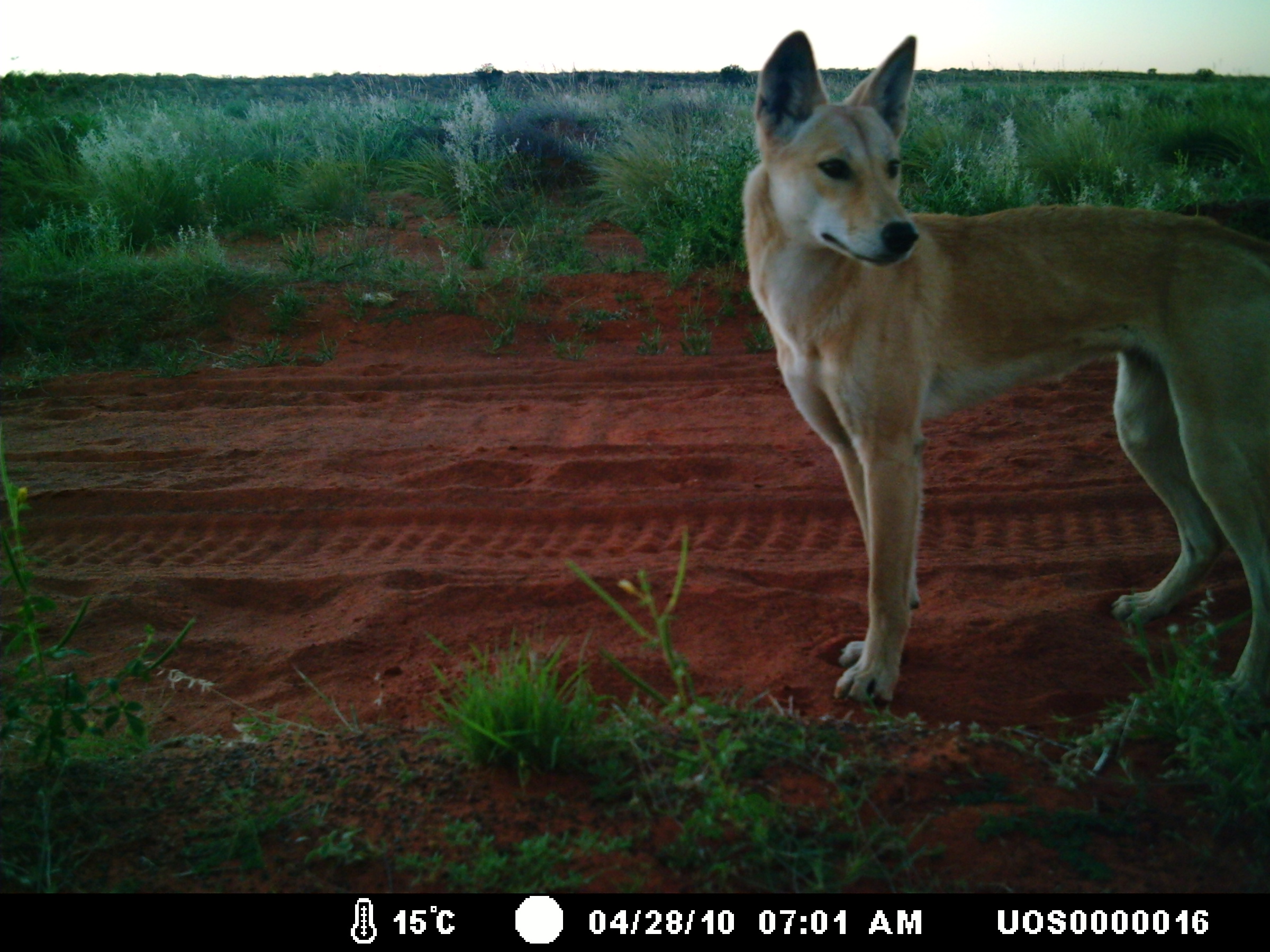
A surveillance operation is underway in one of the most remote parts of the Australian continent. For 24 hours a day over the course of more than two years the lives of three species of predator have been watched, documented and now published. Over this time the Simpson Desert has experienced a rare, yet amazing event: the rains came and it boomed! How did this boom in rodent prey affect our three predators, but more importantly, how did this boom influence the interactions between them? What was the role of the dingo, Australia’s only native canid, in suppressing the feral red fox and cat? These two smaller predators, or mesopredators, have had a drastic effect on the native animals of the interior. Many of these unique native species are now extinct.

MCS162010-06_586

A dingo pauses in front of a remote camera trap set up to monitor predators in the Simpson Desert, Australia.


The mesopredator release hypothesis

The mesopredator release hypothesis predicts that dominant, usually larger, predators will suppress their subordinate counterparts but, if removed, the mesopredators will be “released” from competition or direct interference; increases in their numbers then may lead to increased impacts on small prey. A classic example is the grey wolf that can suppress coyotes in North America. More recently, the lynx has been shown to suppress the fox in Eurasia and in Australia the persecution of dingoes may allow feral cats and foxes to increase in number. The impact of predation from feral cats and foxes on Australian native wildlife has been well documented. For example, at least 34 threatened species have been identified as at high risk from cat predation.


FRS032011-06_0621

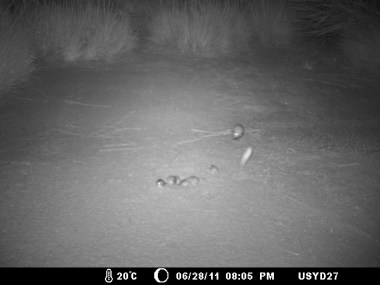
A thief is caught during the night stealing a native rodent (most likely a sandy inland mouse, Pseudomys hermannsburgensis). Feral cats have had a drastic impact on Australia’s native wildlife.


Booms and busts in prey

There has been a long debate in ecology about the importance of bottom-up effects, such as booms in resources and prey abundance, versus the top-down effects of predators. More recently, these two schools of thought have been combined and both are acknowledged as important influences on species populations. The deserts of the world are a great place to study this interaction between bottom-up and top-down effects. Desert populations generally tick along slowly, but every now and then, maybe every 10 years or more in central Australia, flooding rains fall and the desert blooms – and booms! This massive increase in food flows as energy through the ecosystem, and how this changes or modifies interactions between dominant predators and mesopredators (smaller predators) is something we wanted to find out.


TBW272011-11_0033

After a flooding rainfall event, rodent numbers plague. These individuals were caught on a remote camera trap in the Simpson Desert.


Remote camera traps

_MG_5923 low res

Setting up a remote camera trap in the Simpson Desert. These cameras monitor the ground for any movement and take a photograph, with the date and time. This information is very useful for a researcher. Photo by Alan Kwok.

To answer this question we needed to use a method to monitor populations of dingoes, cats and foxes. We cannot be in the field all the time, but a remote camera can. Remote camera traps are activated by movement (and sometimes heat, depending on the model). Once activated, they lie in wait 24 hours per day and when an animal walks past, the trap is triggered. The trap results in a photograph of the individual, with the time, date, temperature and moon phase recorded. This information can be used to build a picture (pardon the pun) of what time the animal is most active and how many are in an area. All this information is gathered without any interference to the animals.

What we found

The interaction between dingoes and the smaller introduced predators is more complex than first thought. During droughts, dingoes suppressed the introduced red fox and cat, with fewer photographs of these smaller predators being recorded with increasing numbers of photographs of dingoes (top-down effects). As populations of rodent prey boomed in number, this relationship broke down and all predator populations increased with the increased availability of prey (bottom-up effects). As prey populations declined and fell back to drought levels, the interaction between dingoes and the smaller introduced predators began again.


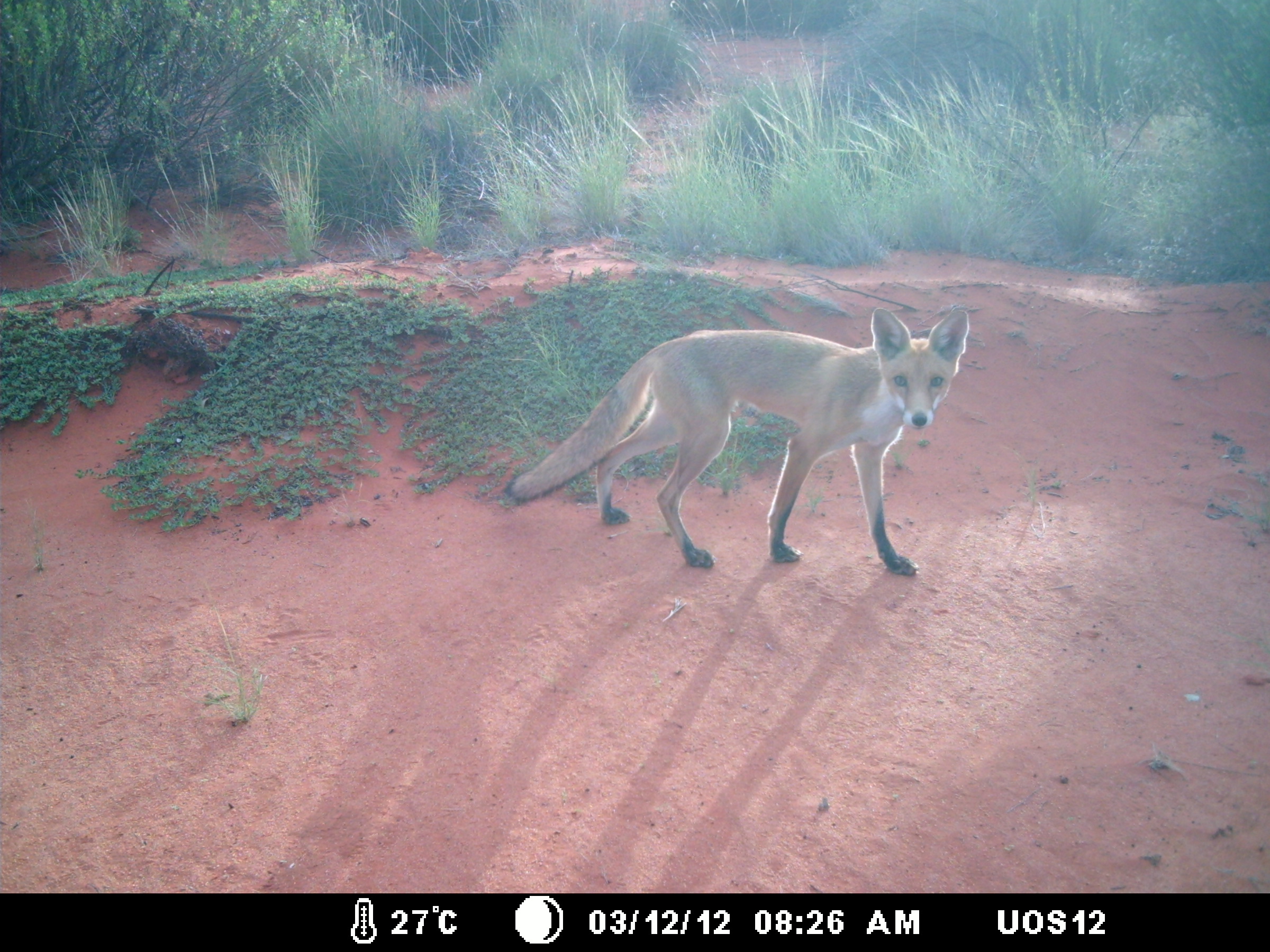
FRN122012-04_1145

An introduced red fox is captured on a remote camera trap in the Simpson Desert, Australia. The dingo may be able to help us control the numbers of this predator in central Australia.


Implications

These findings have implications for how we manage introduced cats and foxes, and also dingoes. Dingoes are still persecuted across Australia due to their impact on livestock. Land managers spend a great amount of time and money implementing control programs to limit the populations of all three predators, but there is a cheaper and easier way. The dingo is an un-paid pest species manager that works every day. By leaving them alone, they can help control populations of cats and foxes for free! Land managers can concentrate their pest species control programs for the period after large rainfall events in central Australia. Imagine pooling resources that are spent every year on controlling cats and foxes in central Australia being used every 10 years or more i.e. the frequency of large rainfall events in central Australia. In the dry times the dingo may be able to do the work for us.

Dingoes will attack livestock and industry-funded reports suggest this costs AUD$ 48 million to AUD$ 60 million annually. Currently, lethal control methods are used to deter livestock attack from dingoes, but history has taught us a deadly lesson if we continue to follow this old idea. Alternatives to lethal control do exist. Guardian dogs can protect stock from dog attack and return the investment on them between one to three years later. These new ideas need to be trialled in central Australia

This project was supported by an Australian Postgraduate Award, Paddy Pallin Grant, Royal Zoological Society of NSW, the Australian Research Council and by the Australian Government’s Terrestrial Ecosystems Research Network (TERN).

Further reading:

Download Australian Mammal Society conference 2013 poster on this work [pdf]

Greenville AC, Wardle GM, Tamayo B, Dickman CR (2014) Bottom-up and top-down processes interact to modify intraguild interactions in resource-pulse environments. Oecologia:1-10


Posted in Conservation, Ecology, Publications | Tagged , , , , , , , , , | 3 Comments

Photography inspiring conservation: Rock Island Bend

From the early days of photography the natural world has provided inspiration, providing the viewer a glimpse into remote and exotic places. Intrepid photographers have hiked in kilograms of photographic gear to capture the first static image, but are these images really that static? Have they inspired conservation or ecology? In this series we will explore some of the images that have inspired us to think about the world around us, well at least for me.

For me the natural world is fascinating. From an early age I collected bones, rocks, and insects, amongst other things from my grandparents farm. Closer to home, I spend countless hours in the local National Park. Even to this day I have a proud collection of biological curiosities that intrigue or disgust friends. So when I first picked up a camera it was obvious where I should point it.

I find it interesting how people interpret the images I take. What do they mean for them and do they feel a similar way to me when I composed the shot?  Perhaps not physically – the uncomfortable angles, the cold mornings to catch a sunrise, the sleepless nights gather enough data for an astrophotograph, but can images make people feel something deeper, and inspire change? Perhaps, as part of an organised campaign they can.

Peter Dombrovskis. Source http://nla.gov.au/nla.pic-an6631500

Rock Island Bend by Peter Dombrovskis. Source http://nla.gov.au/nla.pic-an6631500
An image that became an icon for Australian conversation.

In the early 1970s the Tasmanian Wilderness society lost the fight to save Lake Pedder and the natural lake was dammed by the Hydro Electric Commission of Tasmania. It caused a stir in Tasmania and the mainland. In 1978 the Hydro Electric Commission of Tasmania turned its sights on the Franklin River. Learning from the Lake Pedder experience, the Tasmanian Wilderness Society (now the Wilderness Society), along with the Tasmanian Conservation Trust and the Australian Conservation Foundation mounted their campaign against the Franklin Dam. What resulted next was a historic win for conservation in Australia. By 1983 governments had fallen, political careers were born and one image had helped galvanise national support to save the river – Peter Dombrovskis‘ Rock Island Bend. See here and here for more.

Peter was an amazing wilderness photographer. He would hike in all his photographic gear and then carefully compose the shot. If there were any imperfections, he would take it again. This was no small feat. Peter used a large format 5X4 Linhof Flatbed field camera and a heavy tripod. In 1979 he bought an inflatable raft and set out for a trip down the Franklin River. One misty morning he captured Rock Island Bend. The sense of movement in this image was beautifully captured and it flowed on to help save the river.

For more of Peter’s images see International Photography Hall of Fame and Museum and the National Library of Australia.

Please let me know what images have inspired you.

Next in the series is something out of this world…


Posted in Conservation, Ecology, Photography | Tagged , , , , , , | Leave a comment

Predicting rat plagues in the heart of the continent

They ate the supplies belonging to Burke and Wills, and more recently chewed on the electrical wiring through-out homesteads, and have even disrupted communication networks. An invasion that presumably leaves the Channel Country in western Queensland and spreads out across central Australia, holding siege to some of the remotest and driest regions of Australia.

“…we remained there (Camp 63) until the 5th when we were driven out by the rats…” – Burke 1860

It sounds like a scene from Rommel’s army, moving across the African deserts in World War 2, but it is rare irruption of native rats. One that people rarely see or want to see again. Once every ten years or more conditions change in central Australia and flooding rains fall across the desert. The desert blooms and turns a vivid bright green – such a contrast against the red sand and deep blue sky. A mass seeding event takes place as grasses pour out their life boats in hope of more rain. These are the conditions the long-haired rat, otherwise known as the plague rat (Rattus villosissimus), take advantage of.

long-haired rat

Long-haired rat or plague rat. Photo by Aaron Greenville

The long-haired rat feeds on seeds and vegetation, but also anything else they can get to. If camping in central Australia this rat is known to eat all the paper labels off your tins and even have a go at your swag – it doesn’t matter if you are still trying to sleep in it! Weighing in at up to 280 g they are much bigger than other desert-dwelling rodents and they are not shy in throwing their weight around either. They are aggressive,  quickly monopolising resources, but they do have their enemies; native predators,  including snakes, dingoes, and the nocturnal letter-winged kite. In addition feral cats and foxes take advantage of this abundance in prey.

image

A letter-winged kite comes into land. Channel Country, Queensland. Photo by Aaron Greenville

Given the quite conspicuous nature of the rat, it is surprising that we still do not know that much about its biology. Thus we set out to find out more. In our study published in the Greening of arid Australia: new insights from extreme years, a special issue of Austral Ecology, we collated historic, media and anecdotal records to work out if we could predict when this rat may irrupt. We found there was an 80% chance of a rat plague following a large flooding annual rainfall event of 750 mm. To put that in perspective, central Australia has an average annual rainfall of 150-200 mm.

But where do the rats come from in the first place? They are quite rare in the predominantly dry times in central Australia and disappear from much of the desert, persisting in small and localised refugia. The species is not physiologically well adapted to dry conditions, so the refugia are crucial in providing a reliable supply of green food and moist areas for shelter and digging burrows. Are they holding out in one or multiple refugia? Important information to know if we want to conserve, or manage, this species. We don’t want all our rats in one basket, so to speak. Plomley (1972) suggested that the rats irrupt from a single refuge in the Barkly Tablelands, to the north of our study region, and follow drainage lines into the desert. To investigate this we set up live-trapping grids twelve sites across our study region. We assumed if the rats have only one refugia, as suggested by Plomley (1972), then we would predict that they would move in a wave in one direction from the north and if they followed drainage lines, we would get greater captures at trapping grids closer to these features. We did find greater captures at trapping grids closer to drainage lines, but the direction the rats came from was from the south. This suggested that other refugia exist and drainage lines provide important corridors for dispersal.

So what else was happening at the invasion front? For mammals, it is quite common that juveniles, particularly males, are the predominate dispersers, heading out to find their place in the world. However, we found that the larger rats that were at the invasion front and regardless of sex. Presumably, larger individuals could move greater distances and exploit the new food sources. This could be an important finding for understanding dispersal of invading species, like the cane toad.

Even though the long-haired rat can be an inconvenience to some, it has some interesting biology. Perhaps, in other 10 years time we can find out some more.

References:

Burke, R. O. 1860. Robert O’Hara Burke’s dispatch, Cooper’s Creek, 13 December. MS 13071, Box 2082/1a, Item 13. Records of the Burke & Wills Expedition. Australian Manuscripts Collection, State Library of Victoria, Victoria.

Greenville, A.C., Wardle, G.M. and Dickman, C.R. (2013). Extreme rainfall events predict irruptions of rat plagues in central Australia. Austral Ecology, 38: 754–764.

Plomley N.J.B. (1972) Some notes on plagues of small mammals in Australia. J. Nat. Hist. 6, 363–84

*up-date: This article was re-published in Biology News.

Posted in Ecology, Publications | Tagged , , , , , , , | 2 Comments

EcoTas 2013: Spatial and temporal synchrony in small mammal populations

Here I give a summary of my talk to EcoTas13. A joint conference of the Ecological Society of Australia and New Zealand Ecological Society, Auckland. A big thanks to my co-authors Chris Dickman and Glenda Wardle.

Determining the factors that influence the spatial dynamics of species’ populations remains a key goal in ecology and is an imperative for managing species that are in decline. Sub-populations across species’ ranges seldom share the same level of resources, and this may lead to different densities and growth rates among them. Dispersal may dampen these differences, but this effect decreases with distance.  Nonetheless, local populations can still behave synchronously across large (>1000 km) spatial scales, suggesting that external drivers are operating.

Prof. Patrick Moran
Patrick Moran was born in Sydney in 1917. He was educated at the University of Sydney and Cambridge. At university, he studied chemistry, zoology, mathematics and physics. He was discouraged to continue with mathematics, but persevered anyway. He studied statistics and in the 1950s wrote a series of influential papers on the population dynamics of the Canadian lynx. One of these papers was published in the first volume of Australian Journal of Zoology. This paper described how populations of lynx could be in synchrony across vast areas of Canada, due to climate. This work is now known as the Moran effect or Moran’s theorem. Prof. Moran continued and contributed significantly to the advancement of population biology and statistics. To learn more about Moran see here.

The Moran effect or theorem provides a theoretical basis for population synchrony across large areas, and states that sub-populations with a common density dependent structure can be synchronised by a spatially correlated density independent factor, such as climate.

In this study we tested five hypotheses concerning the spatial population synchrony of five species of small mammals – two rodents and three dasyurids (the carnivorous or insectivorous marsupials). We then use the best fitting spatial models (based on AICc) to incorporate drivers that may regulate these populations. Using Moran’s theorem, we predicted that species with synchronous spatial dynamics are driven by factors that operate at the landscape scale, such as resource-pulses from large-scale rainfall events or wildfires, whereas species with asynchronous sub-populations will be influenced largely by factors operating at local scales.

study species pic

The spatial and temporal population dynamics was investigated for two rodent and three dasyurid species, Simpson Desert, Australia.

MARSS models
MARSS framework is hierarchical and allows modelling of different spatial population structures and parameters, such as density dependence, while including both process and observation variability. Process variability represents temporal variability in population size due to environmental stochasticity. Observation variability includes sampling error.The process component is a multivariate first-order autoregressive process and is written in log-space:
MARSS process eqnwhere X = matrix of all m sub-populations at time t
B = density dependence
u = mean growth rate of the sub-population
w = process errors, assumed to be independent and to follow a multivariate normal distribution with a mean of 0 and variance-covariance matrix Q.
The observation component, written in log-space:
MARSS obs eqnwhere Y = a matrix of observations of all sub-populations at time t,
a = the mean bias between sites
Z =  a matrix of 0’s and 1’s that assigns observations to a sub-population structure.
v = observation error, assumed to be uncorrelated and follow a multivariate normal. distribution, with a mean of 0 and a variance-covariance matrix R

We used multivariate autoregressive state-space (MARSS) models to investigate the spatial population structures of small mammals using 17 ‑ 22 years of intensive live-trapping data from nine spatially distinct sites in central Australia.

What we found
For rodents and the mulgara, sub-populations were synchronous or had two structures and driven by large-scale processes. Populations of the smaller insectivorous marsupials (S. youngsoni and N. ridei) were asynchronous and driven by local events. Density dependence was detected in all species, but was weakest in insectivorous dasyurid marsupials.

The covariates spinifex seed, spinifex cover and 12 months cumulative rainfall were significant drivers of the population dynamics for both species of rodents. For the mulgara, spinifex cover and rodents were both positively correlated with their population. For the smaller dasyurids: S. youngsoni populations were positively correlated with two month prior mean rainfall event size and negatively correlated with mulgara captures (a predator and/or competitor of this species). For N. ridei population only spinifex cover was positively associated.

Our findings suggest that local environmental stochasticity is more important than intrinsic factors in driving dasyurid population dynamics. In contrast, populations of rodents and a large carnivorous dasyurid were driven by both extrinsic and intrinsic factors that operate at the landscape scale, confirming predictions derived from Moran’s theorem.

Further reading:

Moran, P. (1953) The statistical analysis of the Canadian Lynx cycle. Australian Journal of Zoology, 1, 291-298.

Posted in Conference talks and posters, Ecology | Tagged , , , , , , | 2 Comments